Read now


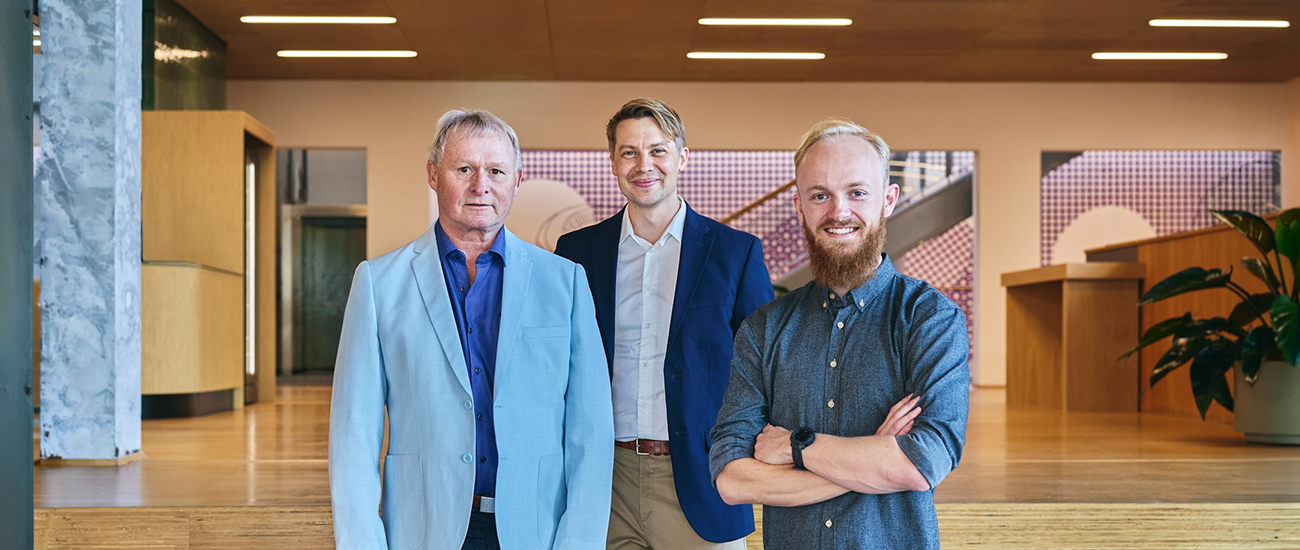
We're delighted to share that we've co-led a €1.5m round into Alcolase, the Danish-British biotech building the world's first enzyme system that breaks down alcohol in the stomach, before it enters the bloodstream. We're joined in the round by Delphinus Venture Capital, Antler, Manigoff Invest and a group of angels.
Alcolase began the way the best companies often do, as a conversation in a Copenhagen student dorm during the pandemic. Mikkel Precht and his co-founders had the biotech training to solve a real-world problem, and after working through a long list of global health challenges, they kept circling back to the same one: alcohol intolerance.
It sounds, at first, like a niche issue. It is not. Roughly 540 million people in East Asia carry a genetic variant called ALDH2 deficiency, which makes it physiologically difficult for their bodies to break down alcohol. The result is flushing, nausea, discomfort, and meaningfully elevated long-term health risks from even modest alcohol consumption.
But the part that struck me most when I first spoke to Mikkel was not the science. It was the social reality. In cultures where drinking is woven into business dinners, networking and family gatherings, people with ALDH2 deficiency are quietly shut out of the rooms where opportunity is built. This is not about wanting to drink more. It is about not being excluded from the table.
Alcolase's technology, a liposomal encapsulation platform that protects enzymes from stomach acid and keeps them active where they need to be, is a genuinely novel piece of biotech with applications well beyond this first product. The company is headquartered in Copenhagen and has now established a UK therapeutic subsidiary to develop the wider drug delivery platform from within the UK life sciences ecosystem. We're particularly pleased that Alasdair Thong, Venture Partner at Ada Ventures, is joining the board to support the team through this next phase.
Alcolase is an investment within our healthy ageing theme, where we back companies using new science to address health problems that disproportionately affect populations the mainstream has overlooked.
ALDH2 deficiency is a textbook example of a problem hiding in plain sight. It affects hundreds of millions of people. It carries real long-term health consequences. And it has been almost entirely ignored by mainstream health innovation, in part because the populations most affected are not the populations whose health problems usually get funded. The current "solutions" are vitamins, antacids and antihistamines that mask symptoms rather than addressing the underlying biology.
This is the kind of market we are built to back. A science-led team, going after a problem that affects hundreds of millions of people, with a technology platform that has the potential to do far more than its first product suggests.
This deal is a story about our network doing exactly what we built it to do.
Alcolase was first sourced and backed by three of our Danish angels, Charlene Putney, Hadiyah Mujhid and Ellen de Bever, who saw what Mikkel and the team were building before most of the venture world had heard of them. They invested as angels, then brought the company to us. Alcolase is now our first fund investment to come through our Danish angel network, and a real validation of why we extend our sourcing reach into ecosystems where extraordinary science is being built but pre-seed capital is harder to find. We owe Charlene, Hadiyah and Ellen our thanks for the conviction and the introduction.
What convinced us, once we got into the company, was the team. Mikkel brings an MSc in Molecular Biomedicine and has assembled a team with deep experience across enzyme engineering, fermentation and biotech scale-up.. His co-founder, Ib Christensen, holds a PhD in Fermentation and Purification with experience across Novo Nordisk, Boehringer Ingelheim and Xellia Pharmaceuticals, which is about as deep a bench as you can build from in this field. CSO Henrik Almblad leads enzyme engineering with a PhD in Infectious Disease and Immunology and an MSc in Human Biology. This is a team that knows the science cold and has done the unglamorous work of validating it.
The early commercial signals are also there. Letters of intent and support from Asian pharmaceutical and food technology companies, as well as one of the world's largest enzyme producers.. Korean government backing. A user survey showing 74% interest and a meaningful share willing to pay €7+ per dose. The team plans to launch first in Singapore, then scale into South Korea, markets where the problem is most acute and the consumer readiness is highest. Alongside that consumer launch, the new UK subsidiary opens the door to developing the underlying enzyme delivery platform for broader therapeutic applications.
With this round, Alcolase will run its in vivo study, deepen the technology and IP, build out the UK subsidiary, and take the first commercial steps in its launch markets. They are hiring across both Copenhagen and the UK, and they are looking to partner with players across the beverage, health and life sciences industries who see what they see, that the same the same encapsulation platform could unlock new applications in drug delivery and industrial bioprocessing, wherever enzymes need to work in harsh conditions. .
If you are working in life sciences, biotech investing, or the East Asian consumer health space and want to support what Mikkel and the team are building, please get in touch via alcolase.com.