The International Diabetes Federation projects that the number of people living with diabetes will reach 783 million by 2045, up 537 million in 2021. In the United States alone, the economic burden of treating obesity-related diseases is estimated at $173 billion annually. These conditions feed into the world's costliest chronic diseases - cardiovascular, chronic kidney, and neurodegenerative disorders - which collectively cost trillions in global healthcare.
GLP-1 receptor agonists are more than just a new class of drugs. They are a breakthrough solution that marks a pivotal moment for modern public health. The market is already exploding - estimated at $53.46 billion in 2024, it is projected to surge to $156.71 billion by 2030. The anti-obesity medication market alone, of which GLP-1s are the dominant component, is forecast to reach between $60 billion and $100 billion by the end of the decade. Last Friday Eli Lilly, makers of GLP-1 weightloss drugs Zepbound and diabetes treatment Mounjaro briefly became the first $1 trillion valued healthcare company.
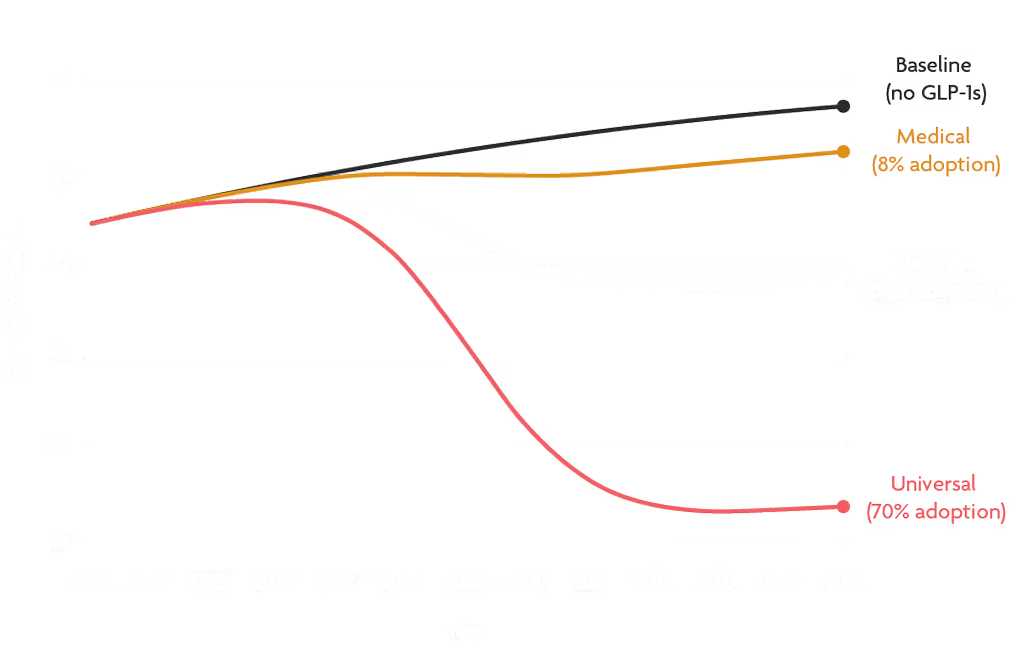
However, without significant innovation in access, policy, and cost, this potential will be squandered. Projections show two remarkably different futures. The first is a baseline scenario where obesity rates continue their relentless climb. The alternative futures, however, show that with broader adoption of GLP-1s, we can fundamentally reverse this trend.
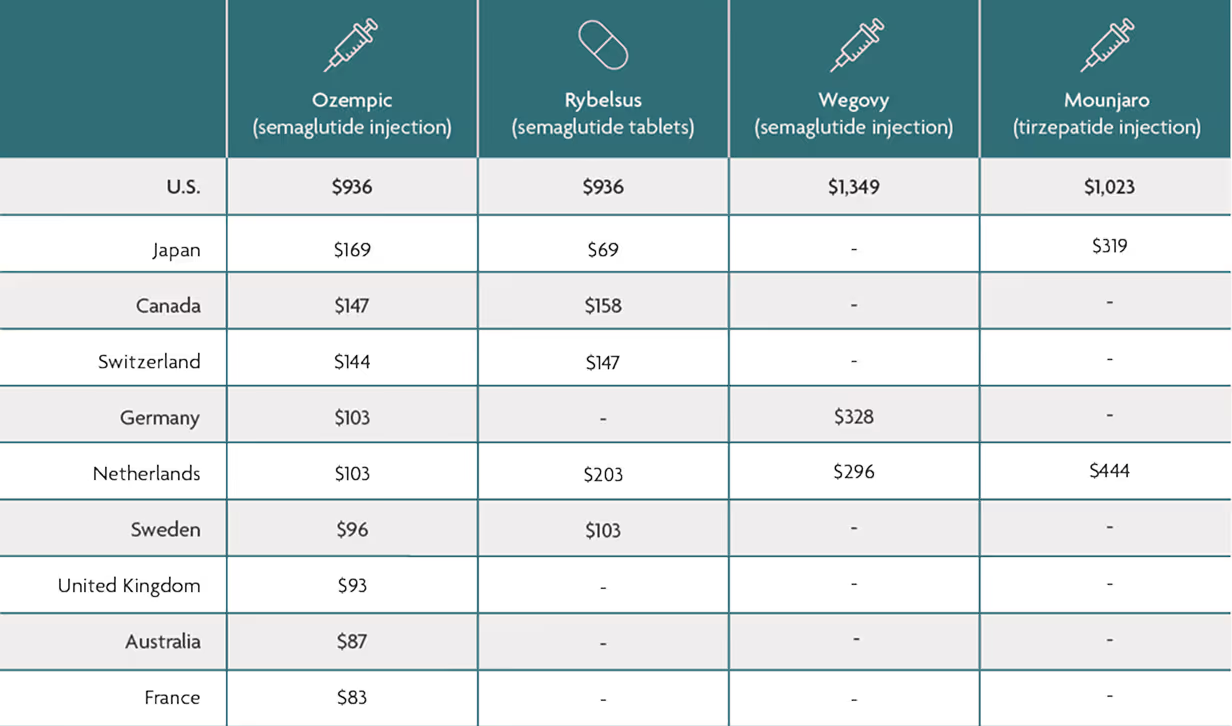
This challenge is amplified by a critical reality: the individuals who would benefit most from GLP-1s (those with obesity and type 2 diabetes) are often the most socially and economically disadvantaged. Making these medications affordable and accessible is therefore pivotal in the success of GLP-1s. Reducing rates of obesity and diabetes could have a powerful ripple effect, easing pressure on healthcare systems, boosting workforce productivity, and improving quality of life across society.